
How to Play Jazz Piano Chords (Voicings, Hand Position & Technique)
WATCH FIRST: If you’re looking for a breakdown of jazz piano chord types (7ths, 9ths, 11ths, 13ths), start here:
👉 Jazz Piano Chords Guide
All Jazz Chords in 3 Minutes:
Jazz Piano Chords (What You’re Actually Playing)
When people talk about “jazz piano chords,” they’re referring to more than just basic triads.
In jazz, chords go higher than 1 3 5 and add::
• 7ths (major 7, dominant 7, minor 7)
• 9ths, 11ths, and 13ths (extensions)
Most Jazz chords consist of 4 notes (minimum), and can go as many as 6 or 7 notes (played in two hands).
Technique for playing Chord Voicings
There's two main ways to play a chord – when it comes to technique:
- All together (at the same time).
I call this playing "as one" – all notes in the chord, played precisely at the same time.
If there's the slightest delay, in any of the notes – you'll sound like an amateur.
Listen to any professional – and you'll notice they play their chords perfectly in unison – all notes "as one".
- Rippled (one note at a time, quickly ascending)
The only other common way to play chords – is rippled.
You roll your hands from left to right – creating an upward 'wave' type of affect.
It sounds stylish. Most effective when applied to chords with 5 or more notes.
How to Practice It
Here’s the simple process I use:
• Find your fingers on the notes first
• Lock your hand shape in place
• Apply a single controlled downward motion from the arm/wrist
The key idea is that the hand becomes one unit.
In slow motion, it looks like this:
• Find the chord notes
• Set the hand shape
• Press down together as one motion
No rolling. No staggered fingers. Just one unified movement.
That’s what you want on every chord — a single, clean impact.
Rippling Chords (Arpeggiated Voicings)
Now let’s talk about rippling chords, which is another essential jazz piano technique.
This is where you play a chord from the bottom up very quickly, creating a flowing, arpeggiated sound. It adds movement and sophistication to your playing.
Any chord can be rippled, but it works best with:
• Richer voicings
• Extended chords
• Two-hand voicings
It’s less effective on simple seventh chords, so don’t overuse it.
How to Use It Musically
A good rule is contrast:
• Play a chord straight (all notes together)
• Then ripple the next one
• Then go back to straight again
You can also reverse that pattern — the key is not to overdo it.
Rippling is something you sprinkle in, not something you apply to every chord.
How to Practice Rippling
To practice:
• Take any chord voicing
• Start from the lowest note
• Quickly roll upward through the notes
• Use a smooth wrist motion (not individual fingers)
Think of it like a wave motion in the hand and wrist — not separate finger strikes.
Then repeat with different voicings:
• Change chord
• Repeat
• Change again
That repetition builds control and fluidity quickly.
Next Step
1. Jazz Theory Study Guide
Get my 100-page jazz theory ebook — with clear explanations, exercises, and video lessons.
Go beyond isolated tips and scattered information. See how everything fits together in one place.
GET JAZZ THEORY EXPLAINED — $29 →
2. Free Jazz Piano Starter Pack
Download some of my most popular jazz piano resources:
✔ ii–V–I progressions in all 12 keys
✔ 29 Jazz Piano Licks
✔ Interval Counting Guide
✔ Chord Symbol Reference Guide
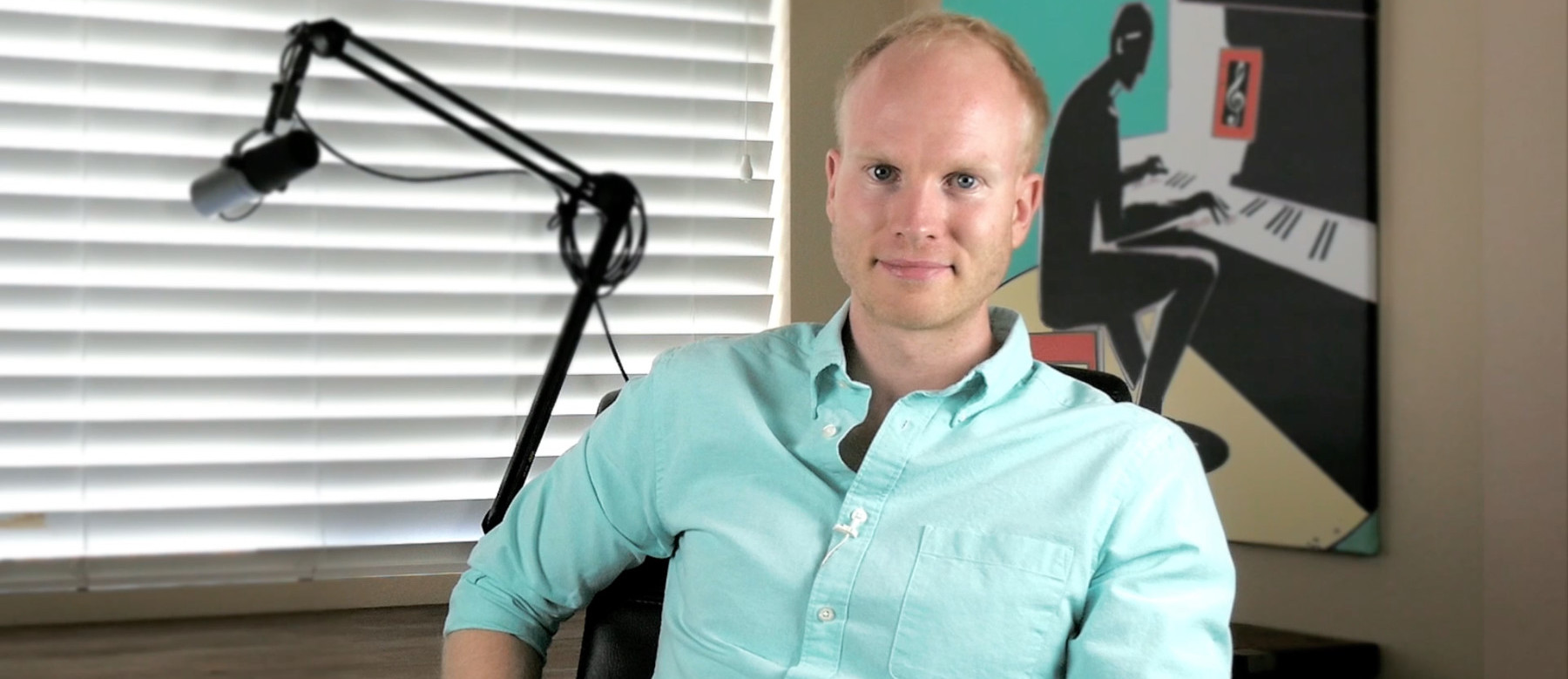
I’m Julian Bradley, founder of Jazz Tutorial.
What you get here is one clear teaching philosophy — not a mix of conflicting approaches.
Simple. Structured. No confusion.