
The Kenny Barron Chord Voicing

Play a stack of two 5ths in your left hand built from C (C G D).
Next, play a stack of two 5ths in your right hand, built from the chord’s minor 3rd (Eb) an octave above (Eb Bb F):
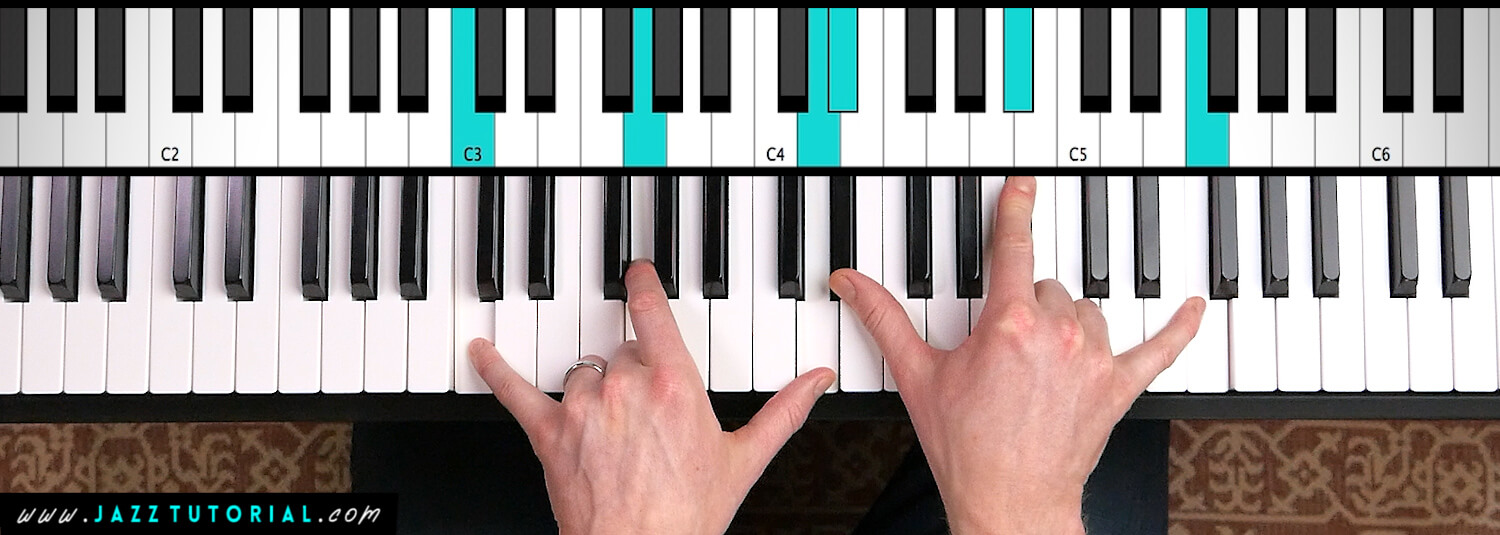
This is known as the ‘Kenny Barron chord voicing’ - since it was made famous by the jazz pianist Kenny Barron who used it often in his compositions (you can hear it in his song ‘Spiral’).
This voicing is ideal when you see a minor 7 chord in the chord sheet, and the melody note is the 4th (or 11th). Just play this voicing and you’ll play the chord and melody note at the same time.
Of course, this chord voicing requires quite big hands to play - you’ll need to be able to stretch a 9th, but I’ll also show you some modifications you can make if you have smaller hands.
The Major Kenny Barron Voicing
Most chord voicings can be made to fit any chord type (usually just by tweaking the chord’s 3rd and 7th to fit the other types of 7th chord).
Here’s how you can modify the Kenny Barron voicing to fit major 7 chords:
Play the same left hand (C G D), but build your right hand from the major 3rd (E) instead of the minor 3rd:
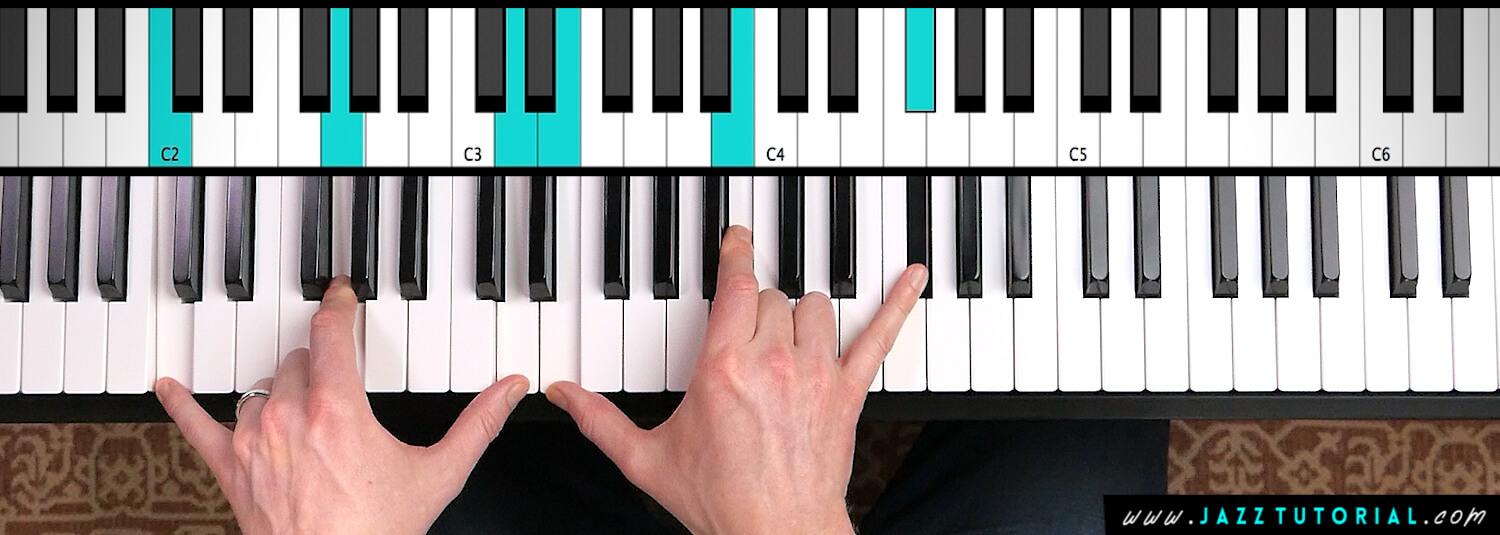
This ‘major Kenny Barron voicing’ is ideal when you see a major 7 chord in the chord sheet (e.g. ‘C maj 7’), and the melody note is the #4 (F#). Just play this voicing and you’ll play the chord and melody note together.
The 'Sawn-Off Kenny Barron Voicing'
Many chord voicings can be ‘sawn-off’ to produce even more variations. ‘Sawn-off’ is my term for cutting off the top note, or sometimes the top two notes, and playing the lower section of the voicing only - like this:
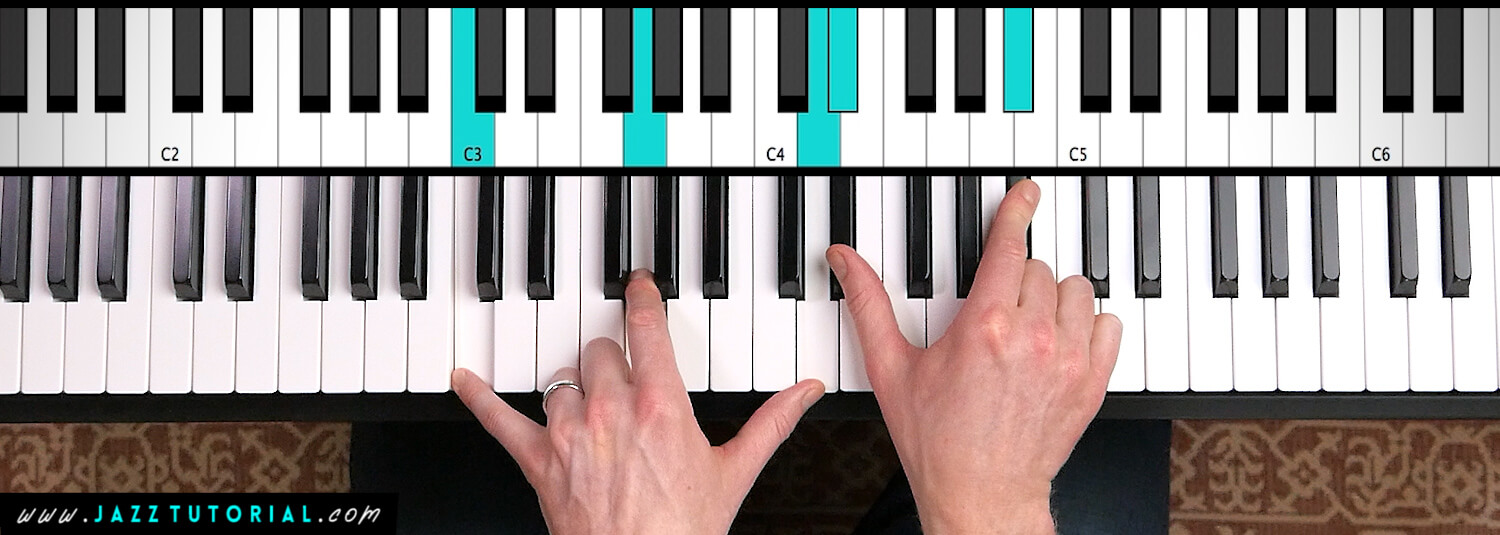
This ‘sawn-off’ voicing would be ideal when you see ‘C min 7’ in the chord sheet, and the melody is the chord’s 7th (Bb).
Of course we can ‘saw off’ the major 7 voicing too:
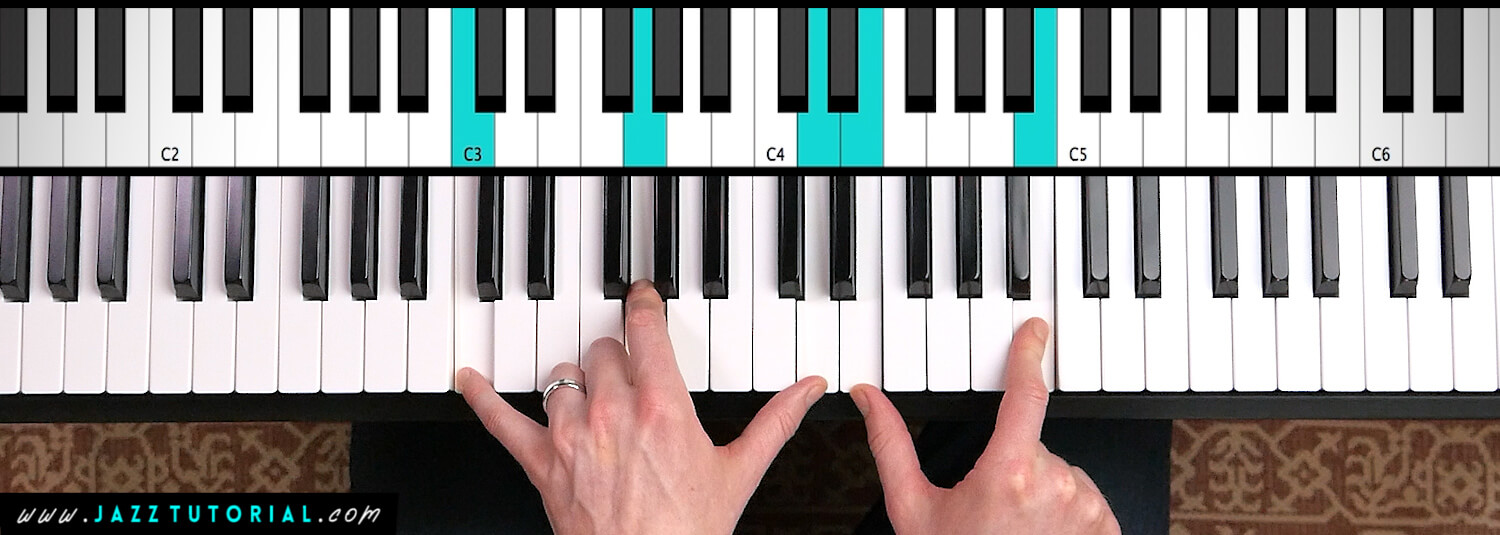
We now have four chord voicings - all based on the initial Kenny Barron voicing.
Modifications for Small Hands
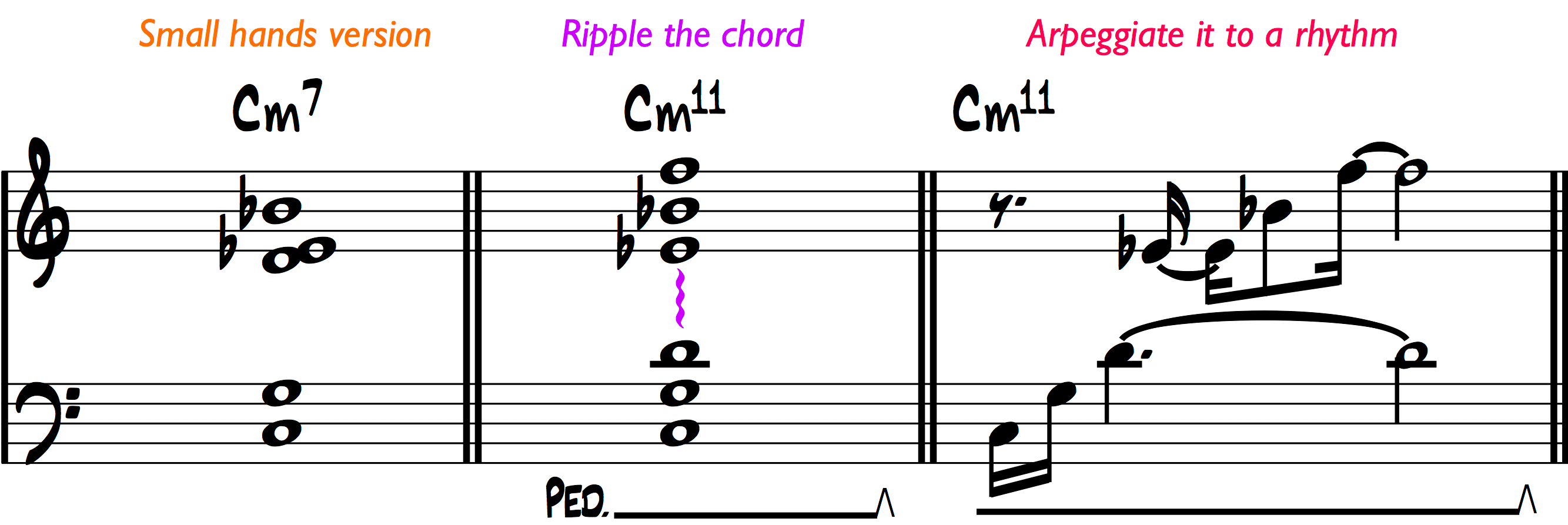
If you can’t stretch a 9th, here are some other ways you can use this great chord voicing:
-
Play the 'sawn-off Kenny Barron voicing' in two hands: C G / D Eb Bb (ideal for when the melody plays the 7th).
-
Ripple the chord - instead of playing this chord in unison, try rippling it upwards while holding down the pedal.
-
Arpeggiate the chord to a rhythm - hold down the pedal and play up the notes of the chord to a syncopated rhythm.
NOTE: To play jazz piano you DO NOT need big hands. Most of the chord voicings I play only require a 7th stretch.
Practice Tip
Practice building the Kenny Barron voicing from all 12 notes (C - C# - D - Eb - E - F - F#, etc). Challenge yourself to build it note-perfectly from all 12 notes - if you make a mistake, you have to go back and start from zero!
Next, play through the songs in your real book and look for opportunities to use this voicing. You're looking for major 7 or minor 7 chords where the melody plays the 4th (11th).
RECOMMENDED SONGS:
• Moon River
• Cry Me a River
• Satin Doll
• Stompin’ at the Savoy
• Slow Hot Wind
• The Taxi Driver Theme
For more voicing systems, see my Jazz Piano Chord Voicings Guide.
Next Step
Want to go beyond individual chord voicings and understand the complete system behind jazz harmony?
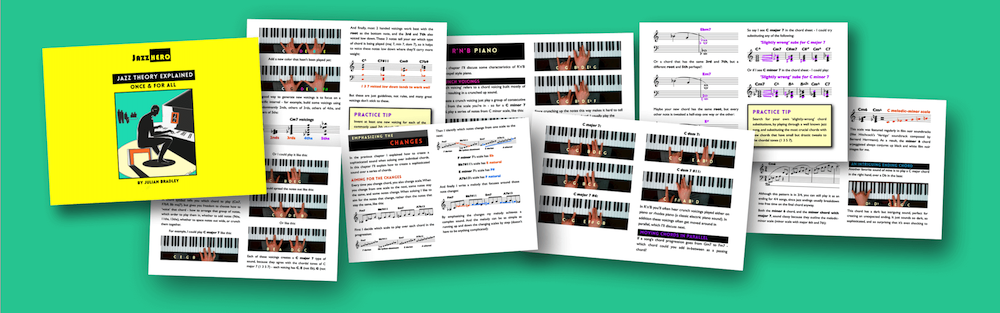
Jazz Theory Explained teaches you jazz chords, progressions, scales, voicings, and improvisation in one concise, 100-page guide.
Fill in the gaps. Connect the dots.
Digital PDF · Instant Download · Print at Home · 90 Days Risk-Free
“Within 5 minutes I knew that it was exactly what I’d been looking for for years.” — Steve Schneider, USA