
Free Jazz Piano Course
Free Jazz Piano Course for Beginners (Step-by-Step)
Learn jazz piano from the ground up — 7th chords, 2–5–1 progressions, chord voicings, improvisation, and jazz harmony – in one ste-by-step beginner course.
Start with Lesson 1 below and follow in order (do not skip)
🎹 Get the practice materials: Free jazz piano resources →
📺 Prefer YouTube? Watch the full course playlist →

Jazz piano feels complicated for most beginners — not because the music is hard, but because it’s usually taught in disconnected pieces.
This course fixes that.
Instead of random lessons, you’ll follow a clear step-by-step system that shows you exactly how jazz harmony works, how chords connect, and how improvisation is built from the ground up.
In This Free Course You’ll Learn:
- How jazz harmony actually works in real music
- The 6 essential 7th chords (maj7, min7, dom7, half-diminished, diminished, minor-major 7)
- The 2–5–1 progression (the foundation of jazz harmony)
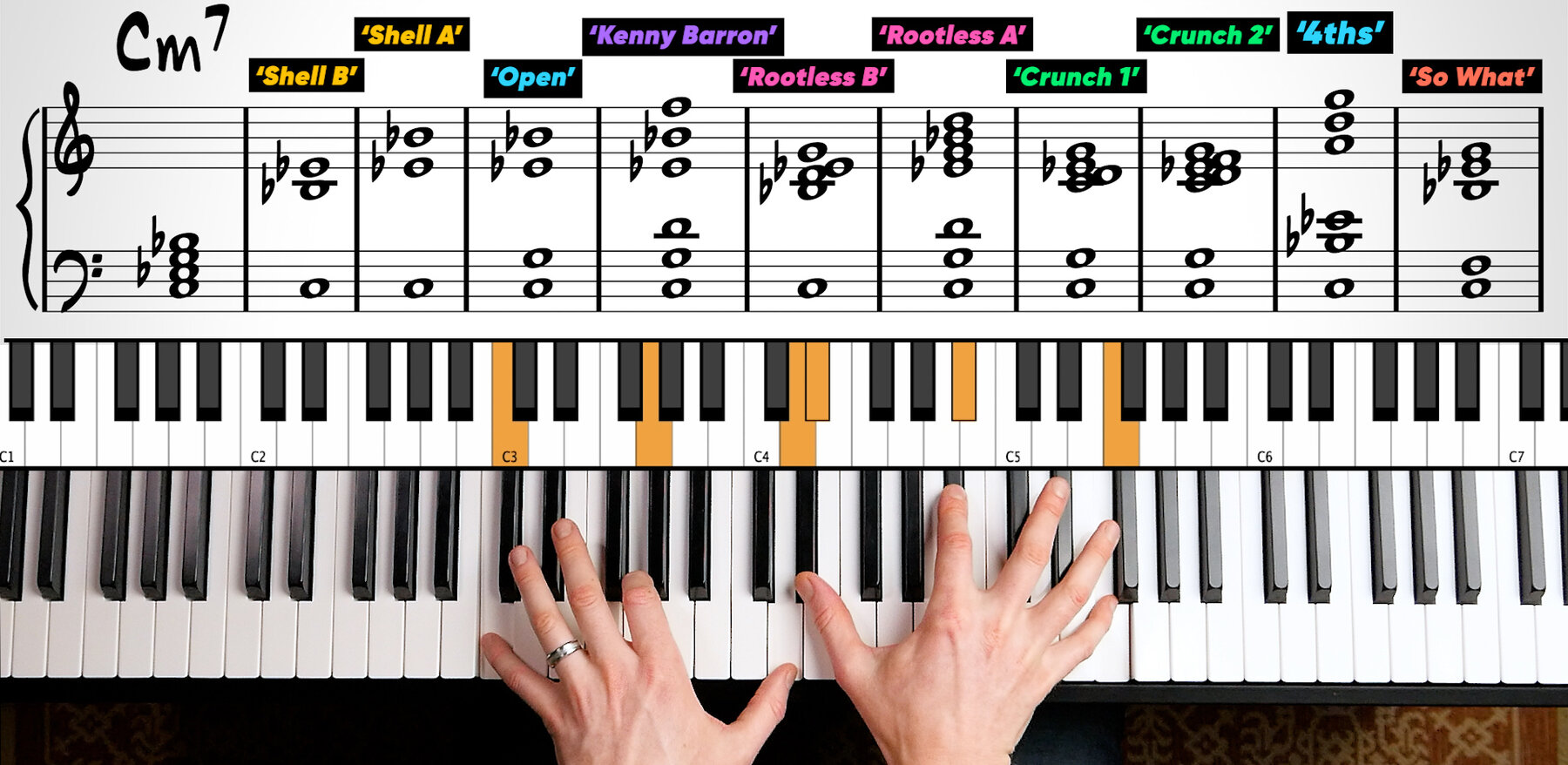
- Jazz piano chord voicings and how to use them
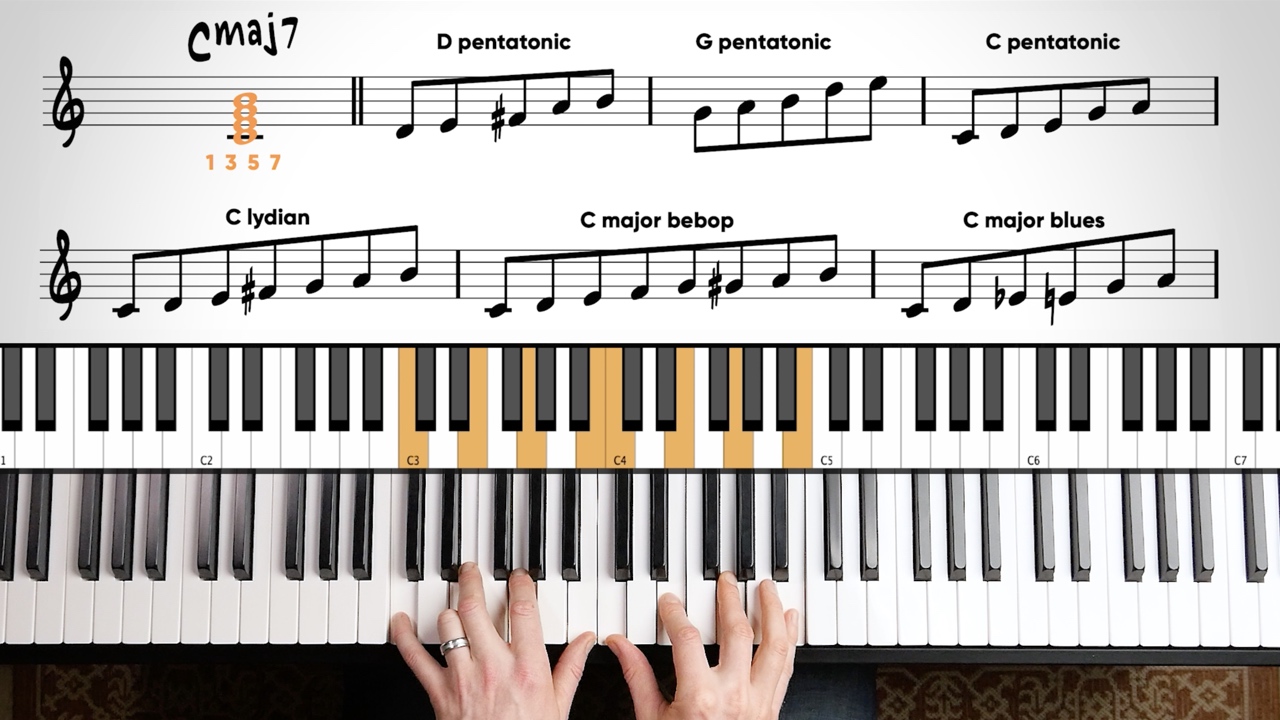
- Jazz scales and how they connect to improvisation
- How to start improvising without getting lost
How This Course Works
This is a structured beginner course.
Start at Lesson 1 and move forward in order. Each lesson builds on the last, so you always know exactly what to practice next.
▶ Watch full course on YouTube →
Make sure you download the free sheet music that goes with the lessons:
Download sheet music →
Course Structure (Start Here)
Lesson 1 — Jazz Theory Foundations (chords, extended harmony, ii–V–I, scales)
Lesson 2 — Essential Jazz Fundamentals (the first 3 things every jazz pianist must practice)
Lesson 3 — Complete Jazz Piano Overview (A–Z system: chords, voicings, improvisation)
Lesson 4 — Shell Voicings (the simplest way to voice jazz chords for beginners)
Lesson 5 — Jazz Improvisation Made Simple (core techniques for building solos)
Lesson 6 — Rootless Voicings (essential advanced voicings for a professional sound)
Lesson 7 — Upper Structure Voicings (a practical system for dominant 7 chords)
Lesson 8 — Jazz Piano Endings (simple, usable endings for any jazz tune)
Why This Approach Works
Most beginners fail at jazz piano for one reason:
They learn techniques without understanding how they connect.
This course gives you the missing structure:
Harmony → Chords → Progressions → Voicings → Improvisation
So instead of memorising shapes, you understand the system behind the music.
Frequently Asked Questions
Do I need music theory first?
Yes – I recommend you first know basic music theory, including: how to read music (treble clef), how to build major and minor chords, how to count intervals (maj 3rd, min 3rd, 5th, 4th, etc), and how to build a major scale from any note.
How long does it take to learn jazz piano?
You can start playing real jazz chords immediately – 7ths, 9ths, 11ths, etc. Just take what I show you and play it at the piano. Beyond chords, you can quickly learn jazz piano vocabulary, and start learning jazz songs, using the simple chord voicings shown in the lessons. Long-term, you can become proficient at jazz piano in as little as two years, if you're highly motivated.
What should I learn after this course?
After this, move to my Ultimate Jazz Piano Guide:
Ultimate Jazz Piano Guide →
Start the Course
Watch on YouTube:
▶ Watch full course on YouTube →
Free Resources (download):
Download all free course resources →
Next Step
Once you've completed this beginner lesson series – the next step is my 'ultiamte guide to jazz piano'.
To watch the complete A-Z roadmap, go here next →
Ultimate Jazz Piano Guide